
Bitcoin mining is the backbone of the Bitcoin network. It is the process that verifies transactions, secures the blockchain, and releases new bitcoins into circulation. Without mining, the decentralized structure of Bitcoin would not function.
Many investors and crypto analysts follow platforms like FintechZoom to understand trends in the mining industry. Through market analysis, mining profitability insights, and updates on technology developments, FintechZoom helps readers understand how mining influences the broader cryptocurrency market.
Bitcoin mining has evolved from a simple activity done on personal computers to a global industry powered by specialized hardware and large-scale mining farms. As competition increases and mining difficulty rises, understanding how mining works and how analysts evaluate the industry has become more important for both investors and crypto enthusiasts.
This guide explores Bitcoin mining in detail, including how it works, the equipment used, profitability factors, and insights often discussed in FintechZoom’s crypto coverage.
What Is Bitcoin Mining?
Bitcoin mining is the process of validating and recording transactions on the Bitcoin blockchain. It ensures that every transaction made on the network is legitimate and permanently stored in a distributed ledger.
When users send Bitcoin, the transaction is broadcast to the network. Miners collect these transactions and place them into blocks. To add a block to the blockchain, miners must solve complex mathematical problems using computing power. This process is known as Proof of Work.
The first miner to solve the problem successfully adds the block to the blockchain and receives a reward in Bitcoin. This reward acts as an incentive for miners to continue securing the network.
Bitcoin mining serves three important purposes:
First, it verifies transactions and prevents fraud such as double spending.
Second, it secures the blockchain by making it extremely difficult to alter past transactions.
Third, it introduces new bitcoins into circulation through block rewards.
Over time, mining has become highly competitive. Early miners used CPUs and GPUs, but modern mining operations rely on specialized machines designed specifically for cryptocurrency mining.
Because of its importance, Bitcoin mining is often analyzed by financial platforms and market analysts who study its effect on the cryptocurrency ecosystem.
How Bitcoin Mining Works
Bitcoin mining operates through a decentralized network of computers that compete to validate transactions and add new blocks to the blockchain.
The process begins when Bitcoin transactions are broadcast across the network. These transactions are grouped into blocks by miners. Each block contains transaction data, a reference to the previous block, and a cryptographic puzzle.
Miners then attempt to solve this puzzle by performing trillions of calculations every second. This process is called hashing. The goal is to find a hash value that meets the network’s difficulty requirements.
Once a miner finds the correct solution, the block is confirmed and added to the blockchain. Other nodes on the network verify the block to ensure the solution is valid.
As a reward, the successful miner receives newly generated bitcoins along with transaction fees included in the block.
Mining difficulty adjusts automatically approximately every two weeks to maintain a consistent block creation time of around ten minutes. If more miners join the network, the difficulty increases. If miners leave, the difficulty decreases.
This dynamic system keeps the Bitcoin network secure while ensuring a steady supply of new blocks.
Fintechzoom.com Bitcoin Mining Insights
Bitcoin mining has become a major area of analysis within the cryptocurrency industry, and financial platforms often examine how mining activity affects market trends. Coverage related to FintechZoom frequently explores topics such as mining profitability, network difficulty, and the influence of large-scale mining operations on the Bitcoin ecosystem.
Mining data is closely connected to the overall health of the Bitcoin network. When mining activity increases, it usually reflects strong confidence among miners and investors. Higher mining participation also strengthens network security because more computational power is protecting the blockchain.
Market analysts often evaluate metrics like hash rate, which measures the total computing power dedicated to mining Bitcoin. A rising hash rate indicates expanding mining infrastructure and growing interest from institutional mining companies.
Another key factor discussed in industry reports is the Bitcoin mining difficulty level. As more miners join the network, the difficulty adjusts automatically to maintain a consistent block production rate. This mechanism keeps the system stable even as global mining competition increases.
Financial platforms that cover cryptocurrency markets also examine how Bitcoin price movements influence mining activity. When prices rise, mining tends to become more profitable, attracting new participants and encouraging existing mining operations to expand.
Because of these factors, Bitcoin mining remains one of the most closely monitored aspects of the cryptocurrency economy.
Bitcoin Mining Hardware and Equipment
Bitcoin mining requires specialized hardware designed to perform complex cryptographic calculations at extremely high speeds. As the network has grown, mining equipment has evolved significantly to remain competitive.
In the early days of Bitcoin, miners could use standard computer processors known as CPUs. Later, graphics processing units (GPUs) became popular because they could handle large numbers of calculations more efficiently.
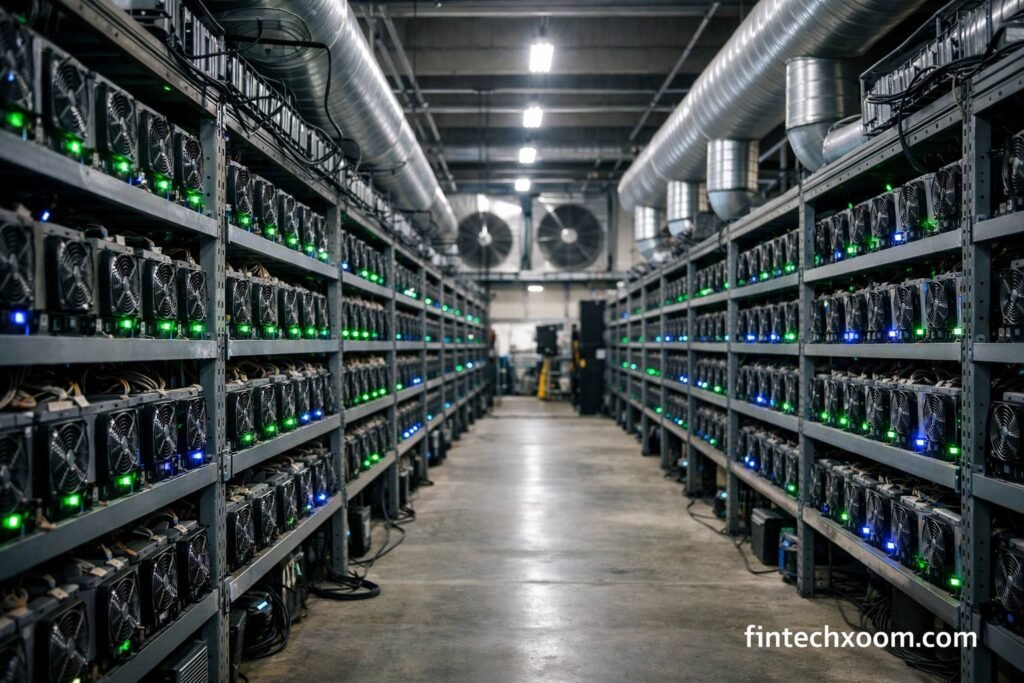
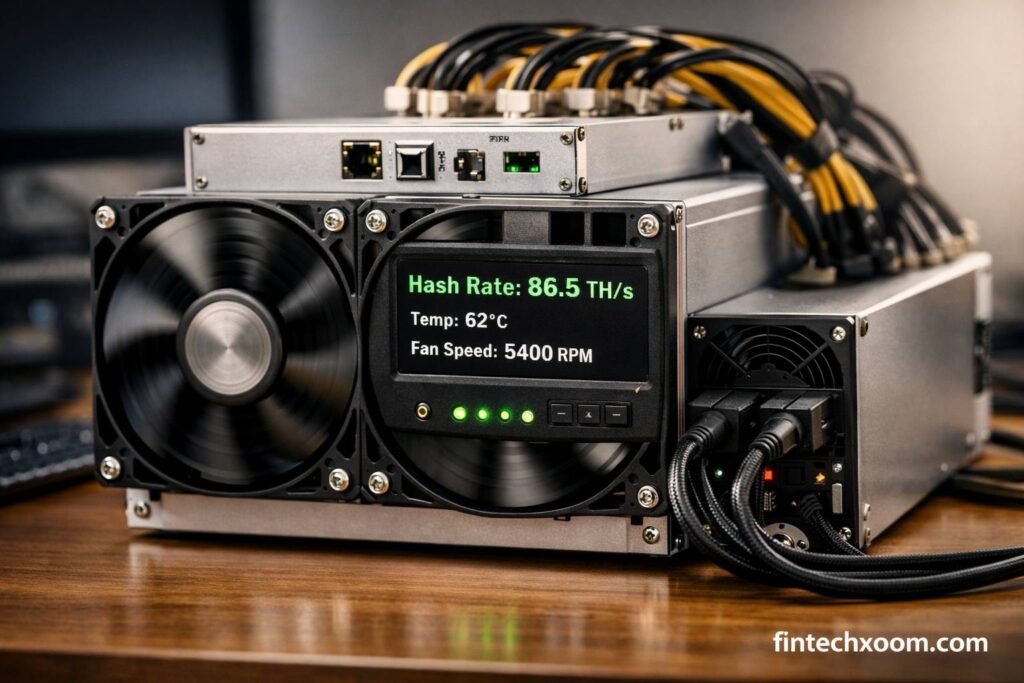
Today, most serious mining operations rely on Application Specific Integrated Circuits (ASICs). These machines are built specifically for Bitcoin mining and deliver far greater performance compared to traditional computer hardware. ASIC miners can process trillions of hashes per second, making them essential for modern mining operations.
Large-scale mining facilities, often called mining farms, operate thousands of ASIC machines simultaneously. These facilities are typically located in regions where electricity costs are low, since energy consumption is one of the largest expenses in mining.
Cooling systems are also critical for mining hardware. Mining machines generate significant heat due to continuous operation, so mining farms use advanced ventilation or liquid cooling systems to maintain optimal performance.
Choosing efficient hardware is essential for miners because profitability depends heavily on processing power, energy efficiency, and the current market price of Bitcoin.
Bitcoin Mining Profitability Factors
Bitcoin mining profitability depends on several important variables. While mining can generate rewards, it also requires significant investment in hardware, electricity, and operational infrastructure.
One of the most important factors is the price of Bitcoin. When Bitcoin’s market value increases, mining rewards become more valuable, making mining operations more profitable. On the other hand, when prices drop significantly, smaller mining operations may struggle to remain profitable.
Another critical factor is electricity cost. Mining hardware runs continuously and consumes large amounts of power. Because of this, many mining companies establish operations in regions where electricity prices are lower, such as areas with abundant hydroelectric or renewable energy.
Mining difficulty also plays a major role. As more miners join the network, the difficulty level increases, which means miners must perform more calculations to solve the cryptographic puzzle required to add a block.
Hardware efficiency is equally important. Modern ASIC miners provide higher hash rates while consuming less energy compared to older models. Efficient equipment helps miners maximize performance while reducing operational costs.
Transaction fees can also contribute to mining revenue. In addition to block rewards, miners receive fees paid by users who want their transactions processed quickly.
Because these factors change frequently, mining profitability is constantly shifting within the cryptocurrency market.
Environmental and Energy Considerations
Bitcoin mining has generated significant discussion regarding energy consumption and environmental impact. Since mining requires powerful machines operating around the clock, the industry consumes a large amount of electricity globally.
Critics argue that high energy usage can contribute to environmental concerns, particularly when mining operations rely on fossil fuel–based electricity sources. However, the mining industry has also been exploring solutions that focus on sustainability and energy efficiency.
Many mining companies are increasingly turning to renewable energy sources such as hydroelectric, solar, and wind power. These energy sources can reduce the environmental footprint of mining operations while maintaining the computing power required to secure the network.
In some regions, mining operations are located near energy production facilities where excess electricity would otherwise go unused. By utilizing this surplus energy, mining companies can operate efficiently while minimizing waste.
Advancements in mining hardware have also improved energy efficiency. Newer mining machines perform more calculations using less electricity, which helps reduce the overall energy demand of mining operations.
As the cryptocurrency industry continues to evolve, environmental considerations are likely to remain an important topic in discussions about the future of Bitcoin mining.
Future of Bitcoin Mining According to FintechZoom
The future of Bitcoin mining is expected to be shaped by technological innovation, institutional investment, and global competition among mining operations.
One major trend is the rise of large-scale industrial mining facilities. Many companies now operate extensive mining farms equipped with thousands of ASIC machines. These facilities are designed to maximize efficiency, reduce operational costs, and maintain high computing power.
Another development is the growing role of institutional investors in the mining sector. Large investment groups and publicly traded companies are increasingly participating in mining operations, viewing them as a strategic way to gain exposure to the cryptocurrency market.
Technological improvements will also influence the future of mining. New generations of mining hardware continue to increase processing power while improving energy efficiency. These innovations allow miners to remain competitive even as mining difficulty rises.
Additionally, geographic distribution of mining operations continues to evolve. Mining companies often move operations to locations with stable regulations, reliable energy infrastructure, and favorable electricity costs.
As Bitcoin adoption expands globally, mining will likely remain a critical component of the cryptocurrency ecosystem, ensuring the security and functionality of the blockchain network.
Frequently Asked Questions
What is Bitcoin mining in simple terms?
Bitcoin mining is the process of verifying transactions and adding them to the blockchain. Miners use powerful computers to solve complex mathematical problems, and the first miner to solve the problem earns a Bitcoin reward.
Is Bitcoin mining still profitable?
Bitcoin mining can still be profitable, but it depends on factors such as electricity costs, mining hardware efficiency, Bitcoin price, and network difficulty. Large mining operations with efficient equipment tend to have higher chances of profitability.
What hardware is required for Bitcoin mining?
Modern Bitcoin mining primarily uses ASIC miners, which are machines designed specifically for cryptocurrency mining. These devices offer high processing power and energy efficiency compared to older hardware like CPUs or GPUs.
Why do analysts track Bitcoin mining activity?
Mining activity provides insights into the health and security of the Bitcoin network. Metrics such as hash rate, mining difficulty, and miner participation can help analysts understand trends within the cryptocurrency market.
Conclusion
Bitcoin mining plays a central role in maintaining the security and functionality of the Bitcoin network. Through the mining process, transactions are verified, new bitcoins are created, and the blockchain remains decentralized and secure.
As the cryptocurrency industry grows, mining has transformed into a global sector involving specialized hardware, large-scale mining farms, and complex economic factors. Elements such as electricity costs, mining difficulty, and Bitcoin market prices all influence the profitability and sustainability of mining operations.
Financial platforms and market analysts continue to monitor mining activity closely because it reflects broader trends within the cryptocurrency ecosystem. By understanding how Bitcoin mining works and the factors that influence it, investors and crypto enthusiasts can gain deeper insights into the evolving digital asset landscape.